

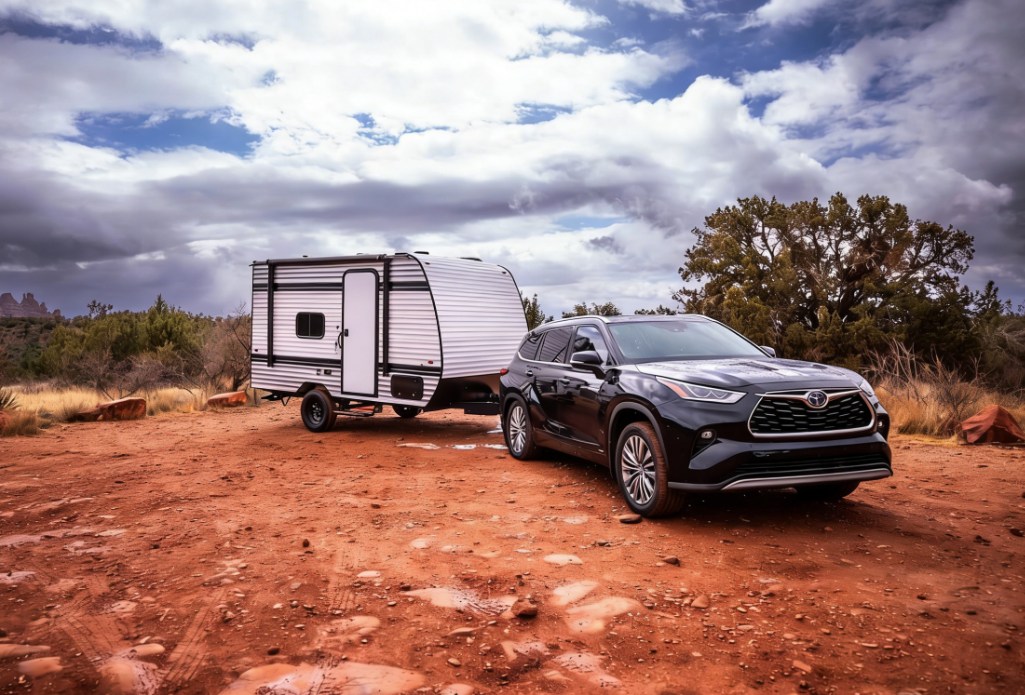
A lot of trailer owners run into this usual problem. They look at the tread depth and spot a fair bit of rubber still there. So they figure the tires will hold up fine. But Trailer Tires stand apart. Car tires for everyday driving tend to wear down through steady mileage. Trailer tires, by contrast, frequently give out from age well ahead of losing their tread.
From اذهب مقطورة, we operate as an established producer in Qingdao, China. Our background includes more than 15 years of experience working with tires and wheels. We realize a trailer left in the driveway for over six months deals with distinct strains, unlike one rolling daily on pavement. We aim to deliver reliable, customized products that meet the exact weather and handling demands in the trailer field.
The Science of Silent Deterioration
Rubber counts as a natural substance that shifts right from the start in the plant. A إطار مقطورة can seem solid overall. Still, the makeup inside keeps changing without pause.
The Problem of Low Usage Frequency
- Lack of Lubrication: Tires hold anti-ozonant chemicals. These come free when the tire bends in motion, aiding protection.
- Chemical Stagnation: A trailer parked for weeks on end keeps those guard chemicals stuck in the rubber. Consequently, the material loses its defense.
- Dry Rot: Lacking the steady flex from road time, sidewalls grow stiff. They easily fall victim to dry rot as a result.
Oxidation and the Loss of Elasticity
- Oxygen Penetration: Oxygen bits work their way into the rubber over time. They tear into the pliable chains that hold it together.
- Hardening: Oxidation, as this breakdown is known, stiffens the tire. It then copes poorly with road heat and load at fast paces.
- Internal Separation: Later on, this oxidation pulls apart the inner belts from the rubber. A major blowout follows suddenly, often without notice.
Environmental Threats: The Sun and the Elements
Top-grade rubber still faces effects from surroundings, above all in tough open-air setups.
UV Damage and Sidewall Cracking
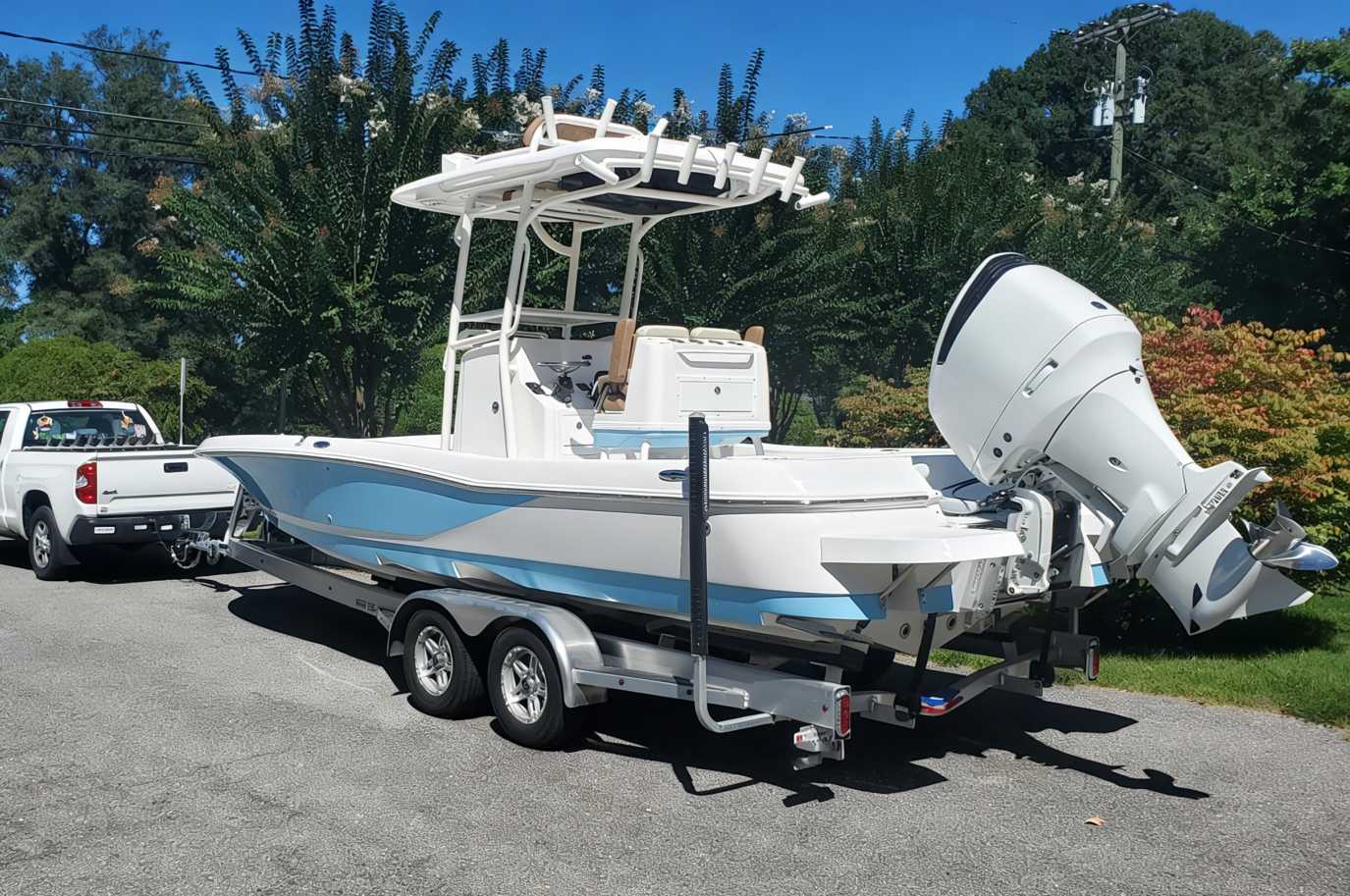
- Solar Radiation: Sun’s ultraviolet rays top the list of threats to trailer tires. They wear down the outer layer bit by bit.
- Visual Warning Signs: UV wear commonly appears as small web-style splits on the sidewall. These show that the rubber’s core strength has weakened.
- Structural Weakness: The splits open paths for dampness and ozone to hit the steel belts within. Rust sets in, speeding up the decline.
Temperature Fluctuations and Storage Impact
- Extreme Heat: Steep heat quickens the splitting of rubber ingredients. Tires break down faster in such warmth.
- Concrete Contact: Placing tires straight on warm or icy concrete over long stretches pulls dampness and oils from the rubber. It leaves them parched.
- The “Flat Spot” Effect: Storing without shifting the trailer applies a steady force to one tire spot. This harms the build inside right there.
Beyond the Tread: How to Inspect Your Tires
Drop the simple penny check alone. For solid safety, review the numbers and close-up signs of tire state.
Identifying the DOT Production Date
- The 4-Digit Code: All tires bear a DOT code on the sidewall. Those ending four digits mark the week and year built, such as “1223” for week 12 in 2023.
- The Five-Year Rule: Field pros, along with our Go Trailer staff, advise changing trailer tires after 3 to 5 years. Tread amount does not matter here.
- Inventory Awareness: Scan the date on fresh tires before purchase. This avoids getting stock that has lingered in a shed for a couple of years.
Physical Indicators of Failure
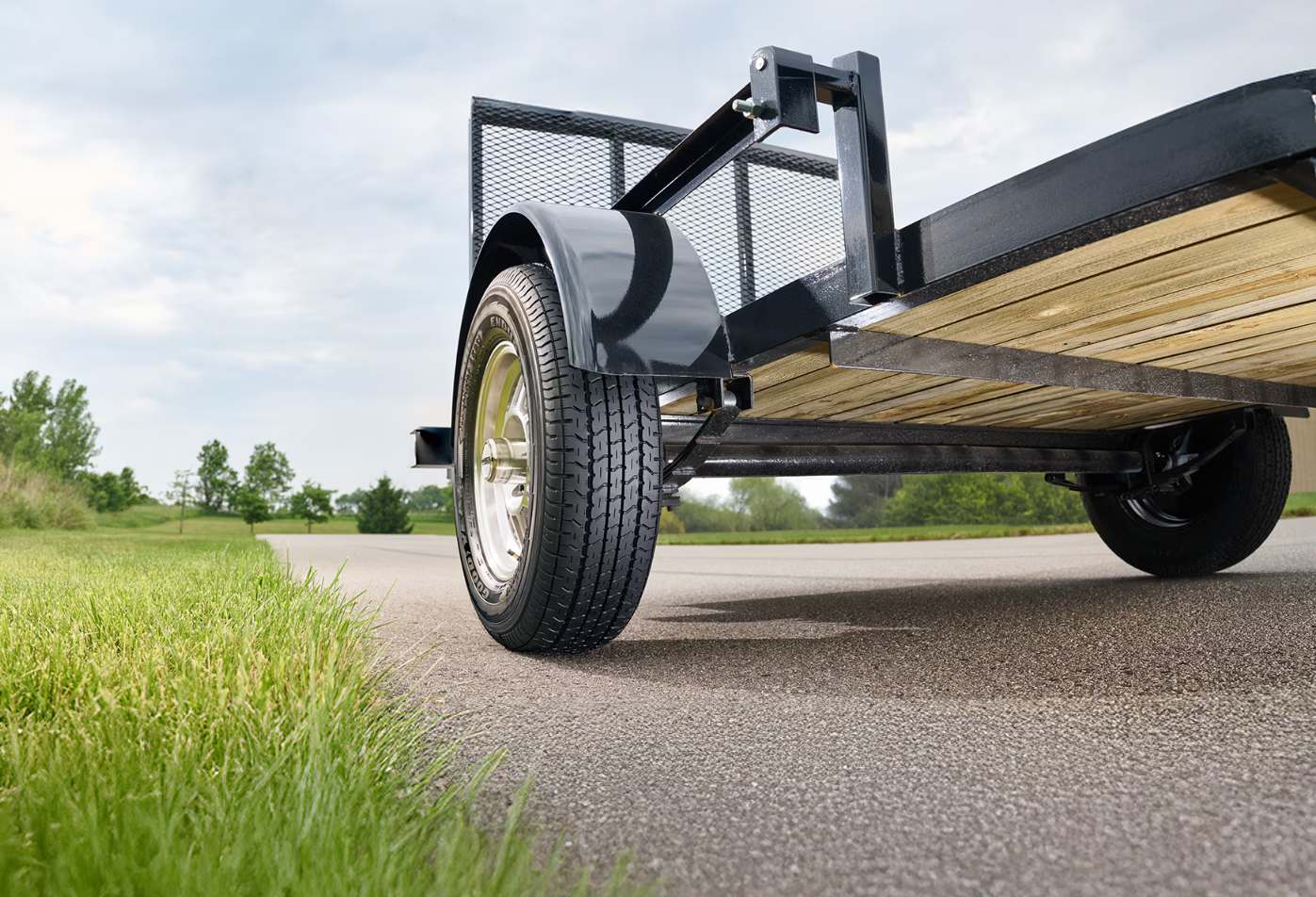
- Bulging and Bubbling: Odd bulges on the sidewall signal belts coming loose inside. Treat this as urgent.
- Discoloration: A flat, gray tone over the usual dark black hints at low anti-ozonant levels. It’s a key clue.
- Deep Cracking: Cracks showing inner cords or cloth mean the tire cannot take loads anymore. Discard it right away.
Go Trailer Solutions: High-Performance Trailer Tires
Beyond basic parts supply, we bring calm through thoroughly checked trailer tires made for actual conditions.
Product Features and Technical Specifications
We build our Trailer Tires to take on the hard pulls of big loads and drawn-out parking:
- Advanced Rubber Compounds: Special sun-fighting mixes in our rubber ease the wear from light rays. This holds back early decline.
- Reinforced Sidewalls: Tires carry firm ply counts of 8 PR to 10 PR. They meet strong pressure needs and limit side swing.
- Specific Models Available:
- 195R14LT: 8-ply rating, load index 106/104, section width 196mm, maximum pressure 450(65).
- 185R14LT: 8-ply rating, load index 102/100, section width 189mm.
- ST235/85R16: 10-ply rating, designed for maximum load capacity and stability.
Engineered to Solve Field-Specific Challenges
- Marine & Boat Trailers: Built-in rust guards let our tires manage the soak-and-dry patterns at ramps and in salt breezes.
- Agricultural & Utility Use: Trailers parked in fields or bare yards benefit from our light-shield rubber. It stops the quick splits common in farm tools.
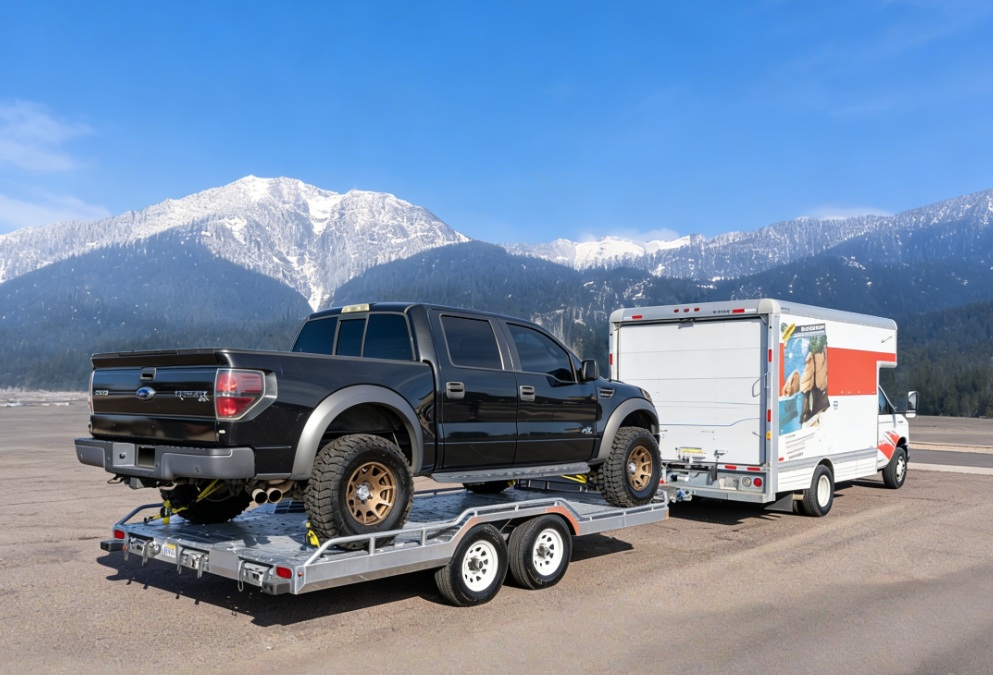
- Long-Haul Car Haulers: Solid load marks on our LT tires deliver the firmness required to shift weighty autos across miles.
The Go Trailer Advantage: Customized Services
Different trailers call for varied setups. For that reason, we supply wide customized picks:
- Customized Sizing: Tires and wheel groups come fitted to your axle fit and room limits.
- Customized Tread Patterns: We guide on tread choices for paved highways or sloppy trails.
- Customized Load Ratings: Partnering with sellers and builders, we fit tire details to the trailer’s planned total weight cap.
Prevention: Extending the Life of Your Rubber
Time keeps moving, but good habits can markedly ease the pace of rubber aging.
Proactive Maintenance Tips
- Tire Covers: Slip on light-bouncing covers during downtime. They guard the sidewalls against straight sun hits.
- Pressure Management: Hold steady at the top PSI shown on the sidewall. This cuts warmth rise and inner wear.
- Rotation and Movement: Roll the trailer just a bit each month, trip or not. It evens out the weight and stretches the rubber.
The Value of Preventive Replacement
A blowout wait brings high costs and risks. Opting to swap Trailer Tires by years served beats the expense of on-road fixes, wrecked loads, or crashes.
Don’t let a hidden danger ruin your next journey. At Go Trailer, we offer sturdy, customized trailer tires to keep you secure while driving.
Contact us today to discuss your wholesale needs or to get a quote on our customized tire and wheel assemblies!
- Email: admin@gotrailerpart.com
- Phone: +86 0532 68976869
FAQ
Q: Why do trailer tires fail more often than car tires?
A: Car tires see daily runs, which move protective chemicals around inside. Trailer tires mostly rest still. That dryness leads to cracks since the chemicals do not spread via normal travel.
Q: How can I tell how old my trailer tires are?
A: Find the DOT code on the sidewall. Its last four digits note the week and year made. Over 5 years calls for replacement, tread or no tread.
Q: Is it safe to use a tire that has small cracks on the sidewall?
A: Surface lines from weather act as alerts. Deep or broad cracks weaken the whole structure. A blowout looms large then.
Q: Can I get a customized tire and wheel set for my specific trailer model?
A: Yes! Go Trailer handles customized work. We align tire measures, weight caps, and rim styles so your trailer runs top-notch.

 Arabic
  English
  Spanish