

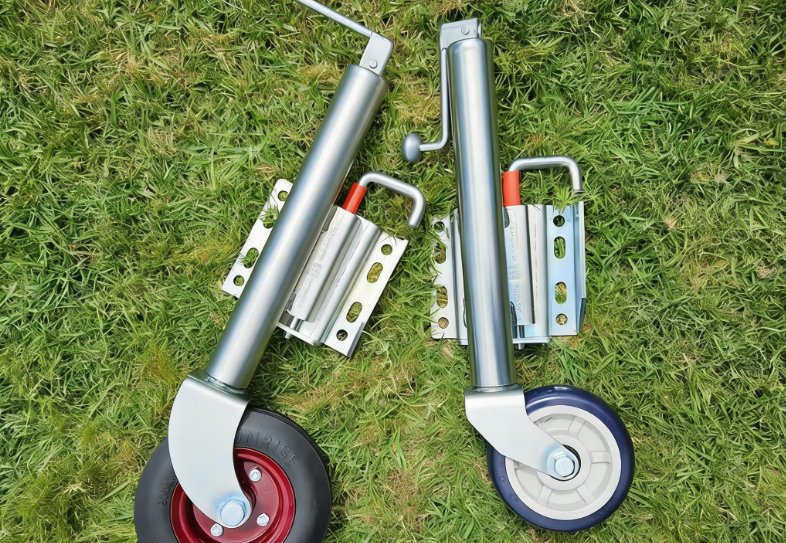
Picture this: you’ve pulled a loaded boat or equipment trailer for hours on the highway. You finally arrive at the storage yard or lakeside ramp. Now comes the part many drivers dread—dropping the hitch and getting the trailer settled in place. Without solid gear, you end up straining your back or scraping the coupler on the dirt. That’s when a good jockey wheel proves its worth. Far from just a metal leg, it gives you control over those last tricky moves. اذهب مقطورة builds these parts with over 15 years of hands-on work in the field. We focus on trailer hardware that makes unhitching straightforward and keeps everything steady.
The Essential Role of the Jockey Wheel in Trailer Parking
A عجلة الفارس mainly holds up the front end of a detached trailer so it doesn’t nose-dive. But it does much more when you need to park.
Achieving Precise Maneuverability and Ground Leveling
Tight spots like narrow home driveways or packed storage lots call for easy hand movement. A sturdy jockey wheel lets one person roll and turn the trailer without much push. Models with swivel bases, like our 1200lbs swivel jacks, spin full circle. That setup helps swing the back end around obstacles. The crank also lifts or lowers the tongue bit by bit. On sloped ground, this keeps caravans or boat trailers level inside. Water drains right in boats, and cupboards stay shut in motorhomes. Ramp users say they can line up a 3,000-pound rig in a 10-foot-wide bay alone, taking just a couple of minutes instead of wrestling for half an hour.
Load Support and Structural Stability during Storage
After parking, the jockey wheel carries all the tongue weight for weeks or months. This keeps the coupler off the ground, away from mud and rust. Go Trailer units handle steady loads from light 300lbs European standard pieces to big 12,000lbs side-winding jacks. Long-term storage on gravel lots or coastal yards stays rock-solid. Wind gusts up to 50 mph won’t tip trailers propped on our heavy models. Owners leave boats outside through winter storms, and the drawbar never touches dirt or picks up corrosion spots.
Key Factors to Consider When Selecting the Right Jockey Wheel
Picking the correct jockey wheel means looking at your trailer’s real-world use. Wrong capacity leads to bent tubes or sudden drops.
Matching Load Capacity to Your Trailer’s Weight
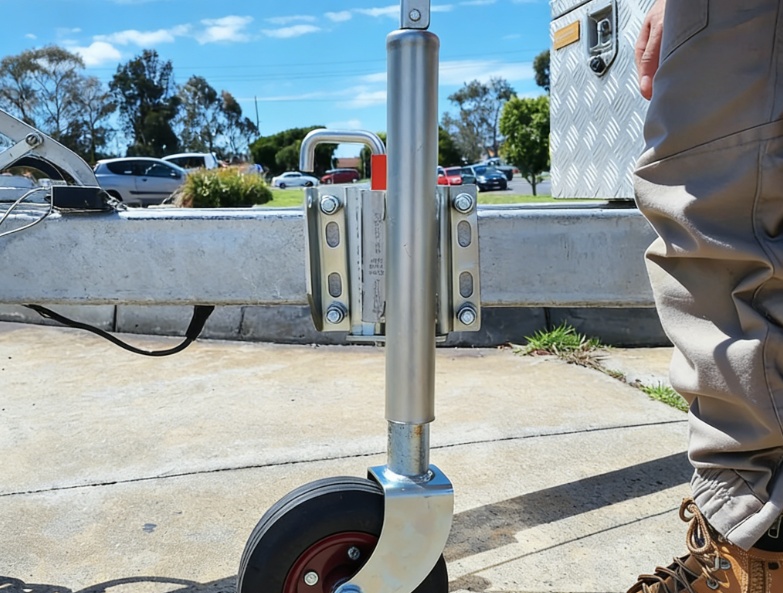
Load rating tops the list. The wheel must beat the tongue weight when the trailer sits full. Small garden or jet-ski trailers manage fine with 500lbs or 1200lbs units on 6-inch or 8-inch wheels. Big boat haulers or machinery rigs need stronger picks. Go Trailer stocks 5000lbs models and up to 12,000lbs jacks with 26-inch travel and 102mm pipe diameter. Those thick tubes crank heavy tongues smooth. Going one step higher in rating adds years of service. Construction crews run our 12,000lbs units daily on 10-ton equipment trailers without wobble after thousands of lifts.
Surface Terrain and Wheel Composition
The parking ground decides wheel style. Go Trailer offers choices built for common surfaces. Concrete pads or tarmac lots roll best with nylon wheels or solid rubber on steel rims. They last long and move with little drag. Soft lawns, beach sand, or muddy sites sink single narrow wheels fast. Dual-wheel kits or 10-inch beach wheels spread pressure. Two 8-inch rubber wheels keep 4,000-pound loads from digging ruts on wet grass. Beach versions float over dry sand at coastal ramps. Launch crews pull boats straight down to the water without the nose burying after rain.
Mounting Styles and Operational Mechanics
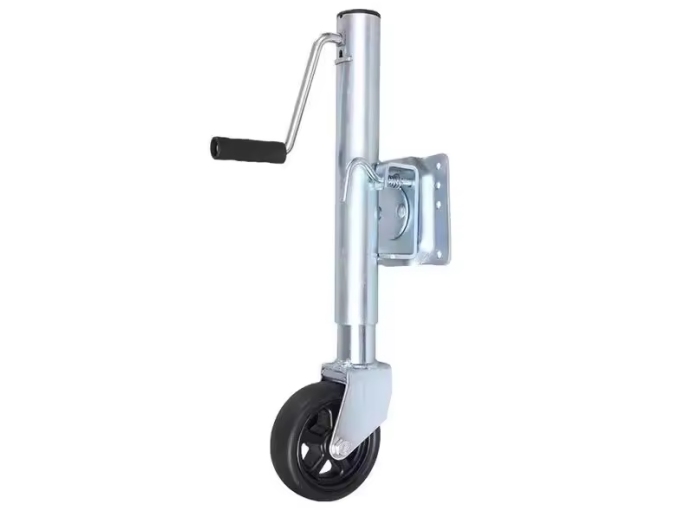
Fit and crank type affect daily handling. Go Trailer supplies brackets for most frames—A-frame clamps, bolt plates, or weld-on pipe sleeves. Cranks come top-wind or side-wind. Top-wind handles turn straight up and down, easy on the shoulders for average loads. Side-wind setups on our 8000lbs and 12,000lbs heavy jacks give extra mechanical advantage. The longer handle cuts the effort in half when raising big tongues. Farm owners with tall equipment trailers pick side-wind for quick lifts before hooking tractors.
Why Go Trailer Provides the Ultimate Parking Solution
Go Trailer runs its own production lines. We design and build parts from start to finish. Every batch clears ISO9001 checks for consistent strength and fit.
Precision Engineering and Robust Material Selection
We start with thick steel and seamless tubes that resist bending under full load. Salt air and road spray hit hard, so finishes matter. Galvanized coating stands up to coastal fog for years without flaking. Black powder coat gives a clean finish that hides scratches on work sites. Our Qingdao plant runs CNC bends and laser cuts for tight tolerances. Welds hold strong, and moving parts line up smoothly right out of the box. Drop tests and load cycles catch weak spots before shipping.
Customized Solutions for Unique Trailer Requirements
Standard sizes cover most rigs, but some jobs need exact matches. Go Trailer handles full custom orders in-house. Customers send sketches for odd frame shapes or extra-long travel. We adjust crank direction, tube length—10-inch, 15-inch, or 26-inch strokes—and wheel setups. Marine builders order batches with special brackets and a galvanized finish for saltwater work. From steel purchase to final pack, we track each step. Turnaround stays practical, even for hundreds of units with unique specs.
Conclusion: Making the Right Choice for Long-Term Safety
A solid jockey wheel from Go Trailer pays off every time you park. Light garden carts run fine on our 300lbs Europe-standard units. Heavy industrial haulers need the 12,000lbs models. Whatever the size, our stock range and custom shop deliver parts that fit your setup. Strong materials, careful build, and options for your exact needs turn unhitching from chore to quick routine.
FAQ
Q: Can Go Trailer provide a jockey wheel tailored to my specific trailer dimensions?
A: Yes, we offer a comprehensive, customized service where our technicians work with you to add preferences such as specific winding configurations, travel lengths, and wheel types to meet your unique needs.
Q: What is the maximum load capacity available for your jockey wheels?
A: Our product range is extensive, offering load capacities from 300lbs for light-duty up to 12,000lbs for heavy-duty applications, ensuring we have a solution for every type of trailer.
Q: How do you ensure the quality and durability of your products?
A: Go Trailer is ISO9001 certified and utilizes a strict quality control system. We use precision seamless steel tubes and high-grade surface treatments like galvanization and powder coating to ensure long-term durability.
Q: What is the typical delivery time for an order?
A: Generally, it takes about 35 days after receiving your advance payment. The specific time depends on the items and the quantity of the order, and we provide real-time feedback on the production process every two days.

 Arabic
  English
  Spanish