

Towing a heavy load—whether a large boat trailer or a commercial car carrier—takes more than strong engine power; it calls for brakes you can trust completely. In trailer repair and upkeep, the terms Drum Hub and Rotor often lead to mix-ups. Getting them wrong results in ordering the wrong parts, lost time on labor, and risks to safety.
At Go Trailer, we have focused on trailer components for more than 15 years. Located in Qingdao, China, we build solid parts aimed at the tough markets in the US, Australia, and Europe. Our main goal remains clear: deliver strong, made-to-order items that keep fleets running without trouble.
The Fundamental Distinction: Assembly vs. Component
The main source of confusion comes from how these parts fit together. A Drum Hub and a Rotor do not serve as direct substitutes. Instead, they sit at different levels within the braking setup.
To pick the correct replacement, start by grasping the basic difference between a full unit and one working surface.
The Drum Hub: A Comprehensive Braking Powerhouse
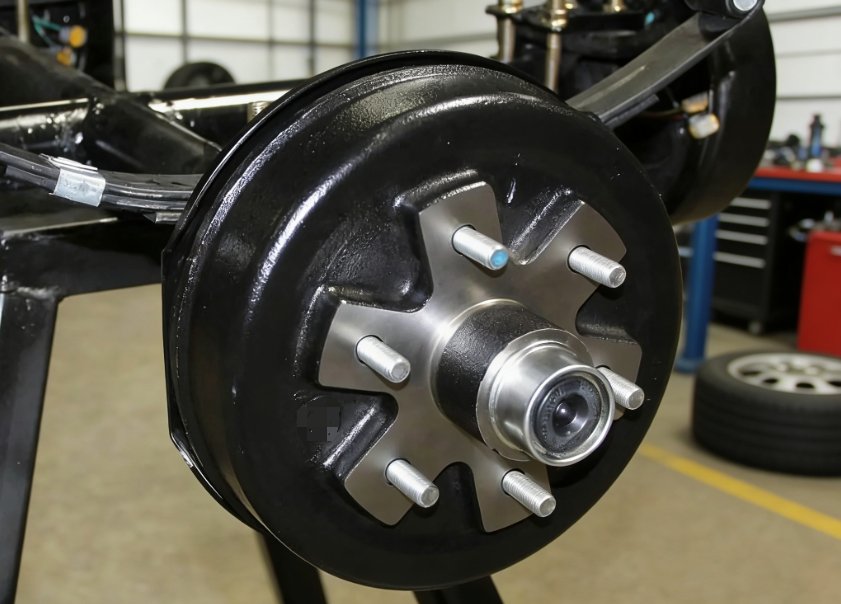
A Drum Hub forms a complete package. It connects the trailer axle to the wheel and acts as a single, ready-to-install piece. Inside it, you find:
- The outer drum that provides the friction area.
- Inner and outer bearings.
- Grease seals along with wheel studs.
- The hub space is filled with lubricant.
Go Trailer’s Drum Hubs, including our common 5-stud and 6-stud versions, handle loads from 1000KG up to 1500KG. Since the unit comes fully assembled, swapping one usually refreshes bearings, seals, and the drum surface all at the same time.
The Rotor: The Friction Surface Within the System
The Rotor, sometimes called the brake disc, refers only to the flat metal circle that brake pads clamp against to slow the wheel. In disc-brake trailers, this rotor mounts separately onto a hub. On drum-brake systems, the drum itself—built right into the hub—carries out the same friction role.
| Feature | Drum Hub (Assembly) | Rotor (Part) |
| Definition | A full unit that includes bearings and studs. | A single disc that serves as the friction surface. |
| Complexity | High (contains several joined parts). | Low (one solid cast piece). |
| Function | Carries wheel load and delivers braking force. | Offers the contact area for brake pads or shoes. |
| Maintenance | Needs regular grease checks and seal reviews. | Requires inspection of surface thickness and evenness. |
Symptom-Based Diagnosis: Which One Should You Replace?
Spotting the actual fault helps decide between replacing the whole assembly or only a single piece.
Most trailer operators notice trouble first through changes in how the trailer pulls or stops. Here is how to read those clues.
When the Drum Hub Assembly is the Culprit (Bearings and Heat)
Replace the full Drum Hub assembly when you notice:
- Grinding or high-pitched chirps coming from the wheel area: worn or failed bearings usually cause this sound, and because they sit inside the hub, a complete swap often proves quicker and safer.
- Very hot hub center after a drive, while the rim stays cooler: failed grease or seized bearings create this heat buildup.
- Noticeable wheel play or looseness even after tightening lug nuts: worn bearing races inside the hub lead to that movement.
When Only the Rotor Requires Attention (Vibration and Wear)
The friction surface—whether the drum inner wall or a separate rotor—likely needs work when:
- Brakes cause strong pulsing or shaking through the trailer: warped metal from overheating throws off smooth contact.
- Stopping distance grows longer than normal: deep scoring or grooves stop the shoes or pads from gripping fully.
- Loud squeals appear during braking: glazed spots or heat marks on the surface produce that noise.
Go Trailer’s Drum Hub Solutions: Built for the Long Haul
Go Trailer does more than produce parts; we design items meant to handle rough conditions year after year. We rely on CNC machining and precise laser cutting to keep sizes accurate and quality consistent.
Technical Features of Go Trailer Drum Hubs
- Versatile Fitment: Offered in 5-stud patterns (PCD: 114.3mm, 120.0mm) and 6-stud (PCD: 139.7mm).
- High Payload Capacity: Rated from 1000KG to 1500KG per hub, well suited to medium and heavier trailers.
- Superior Finish: Electrophoresis treatment plus spray coating adds strong rust protection.
- Precision Engineering: Automated lines handle every step so hubs stay balanced and bearings seat properly.
Solving Real-World Problems: Application Scenarios
Our Drum Hubs address frequent trailer headaches in these settings:
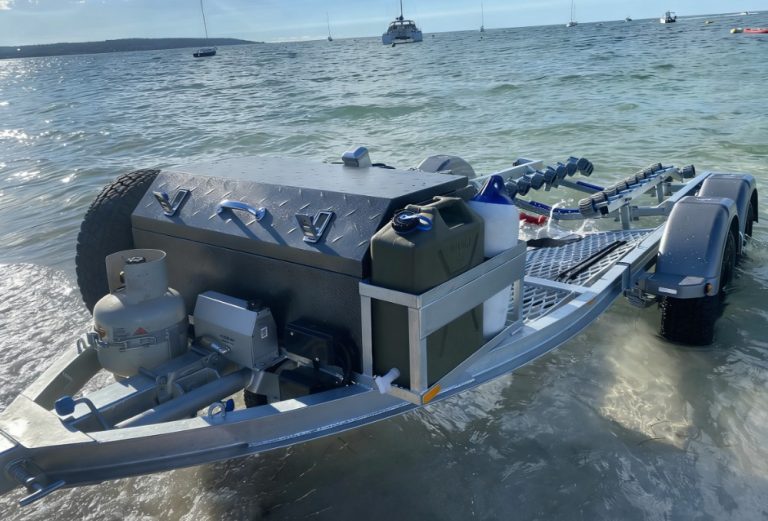
- Boat Trailers (Saltwater Protection): Salt air and water speed up rust on regular hubs. Our galvanized and electrophoresis-coated Drum Hubs resist corrosion better, so brakes do not seize after launching or recovery at the ramp.
- Car and Utility Trailers (Heat Management): Heavy loads around 1500KG build serious heat on long runs. Our hubs include better heat escape paths that help keep grease stable and bearings alive longer.
- Cage/Farm Trailers (Dust and Debris): Dust and mud often work into hubs in farm work. We fit tighter, more effective seals to keep dirt out and cut down on surprise breakdowns in the field.
The Advantage of Customized Engineering with Go Trailer
Trailer needs vary widely across markets. A jet ski hauler and a large tipper trailer demand different specs.
We move past off-the-shelf items by offering custom manufacturing.
Tailored Solutions for Global Manufacturers
Go Trailer builds to match regional differences (Australian, American, European standards).
- Customized Design: Supply your drawings or OE references, and we produce Drum Hubs to fit.
- Customized Branding: Add your own nameplates or logos for distributors and builders.
- Customized Packaging: Choose pallet loads or individual retail boxes that arrive ready for sale.
Partner with Go Trailer for Reliable Performance
A bad hub should not halt your work. Working straight with Go Trailer skips dealer markups and delays. Our long experience with wheels and axles helps keep trailers safe, dependable, and ready for the road.
Ready to improve your trailer’s braking setup? Contact Go Trailer today for a tailored quote.
FAQ
Q: Can I replace just the bearings in my trailer hub, or do I need the whole Drum Hub assembly?
A: Bearings can be changed alone, but the job needs special presses to remove old races and install new ones correctly. For most fleet operators, swapping the complete Drum Hub assembly saves time and money since everything—studs, drum surface, bearings—comes new and properly aligned from the factory.
Q: How often should I inspect my trailer’s Drum Hub for maintenance?
A: On regular utility trailers, check and add grease every 12 months or 12,000 miles. For boat trailers that go into water often, inspect after each season to catch early corrosion or bearing wear.
Q: Why does my trailer vibrate only when I apply the brakes?
A: Warped drum or rotor surface almost always causes that shake. Overheating makes the metal uneven, so shoes or pads skip across high spots. Replace the Drum Hub assembly or the rotor to fix it.
Q: Do you offer customized bolt patterns for specialized axles?
A: Yes. We handle custom runs. Send a drawing or sample, and we can match exact PCD and stud counts to your axle setup.

 English
  Spanish
  Arabic