

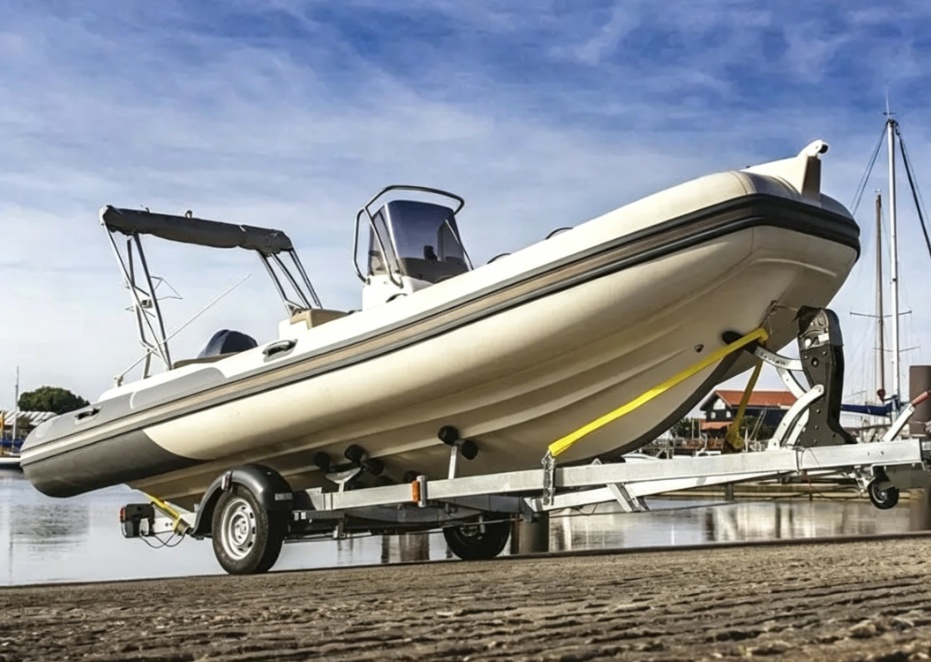
Every boat hull sits in the water differently, so using a standard trailer setup without proper adjustments can put your boat at risk. At Go Trailer, a professional manufacturer of trailer parts based in Qingdao, China, we focus on marine components that reduce friction during loading and protect the hull from damage. Through modern production methods and durable materials like Polyurethane (PU) and Thermoplastic Rubber (TPR), we deliver practical solutions straight from our factory to customers worldwide.
V-Hull Boats: Deep-V Support and Keel Alignment
V-hull boats have a sharp front that widens toward the back. This shape needs support that centers the weight and keeps the boat steady from side to side.
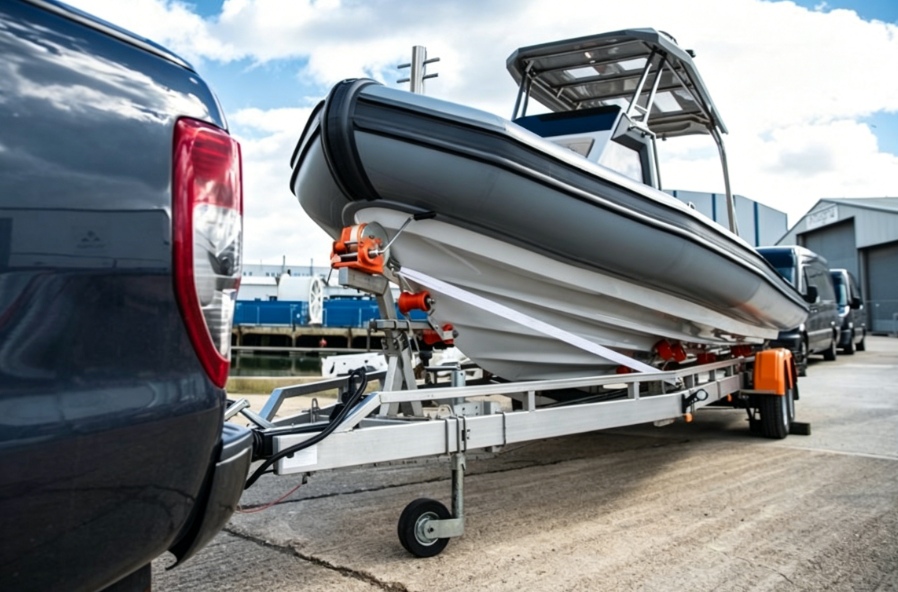
Center Keel Placement via Heavy-Duty Bottom Rollers
The keel supports most of a V-hull boat’s weight when out of the water, so strong center support is essential.
- Component Specification: The Go Trailer Bottom roller(Φ5 × 202 mm with a Φ17 mm inner hole) works well for placement along the trailer’s crossmembers.
- Material Selection: High-grade PU or TPR versions resist yellowing and handle heavy loads better than standard rubber.
- Problem Solved: This setup stops the keel from rubbing against the trailer frame, especially in windy conditions during loading.
Lateral Stabilization using the 2x4 Roller Group
As the hull widens higher up, the trailer must prevent sideways movement without pressing too hard in one spot.
- Component Specification: The Go Trailer 2×4 Roller group (packing size 655 ×341 × 268 mm, weighing 13.4 kg) gives a wide support area for the hull sides.
- Load Distribution: The group spreads pressure across eight separate pivoting rollers, increasing contact with the boat.
- Problem Solved: It reduces stress on the fiberglass and keeps the boat centered during road trips.
Angle Adjustment Techniques for Deep-V Hulls
Matching the rollers to your boat’s specific angle ensures even support.
- Loosen Hardware: Release the U-bolts on the roller brackets so the assemblies can move freely.
- Angle Matching: Lower the boat onto the trailer so the rollers adjust naturally to the hull’s shape.
- Lock Down: Once full contact is made across all rollers, tighten the bolts firmly.
Pontoon Boats: Dual-Hull Cradling and Step-Down Clearance
Pontoon boats rest on two or three round aluminum logs. They need support on the sides rather than a center keel.
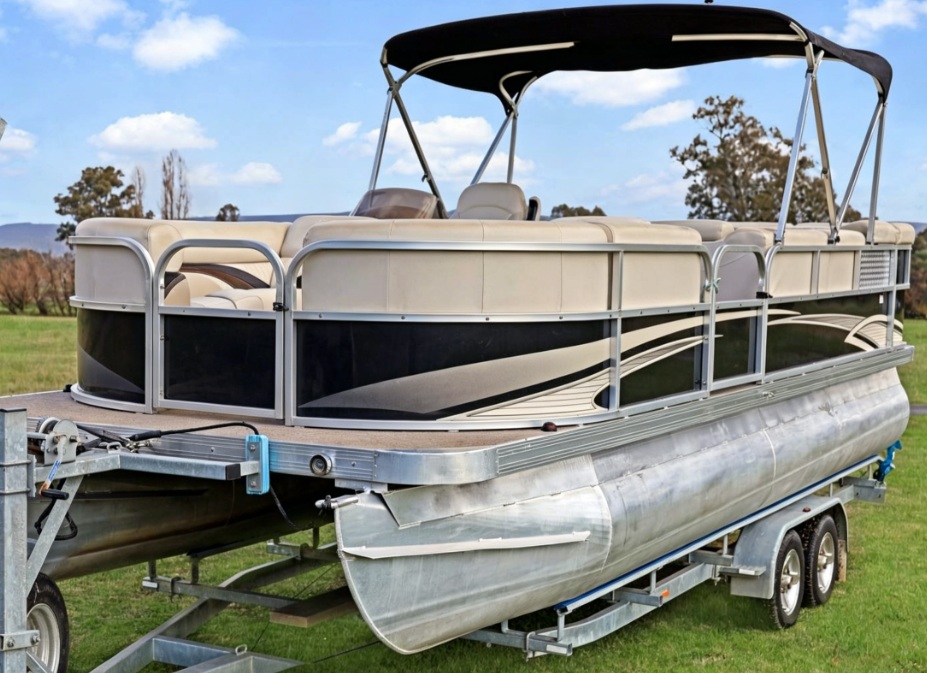
Double Hull Tracking with Custom Side Rollers
Round pontoon logs can shift sideways without proper guides.
- Component Specification: The Go Trailer Side roller(Φ122 × 72 mm with a 750 kg maximum payload capacity) follows the curve of the logs.
- Targeted Placement: These rollers mount on brackets along the inner and outer sides of each log.
- Problem Solved: This prevents sliding in strong currents and stops the aluminum from scraping against metal parts.
Bow Stopping and Transitioning with the Top Roller
The flat front deck of the pontoons can hit hard during winching at the ramp.
- Component Specification: The Go Trailer Top roller (Φ80 ×158 mm with a Φ14 mm inner hole) cushions the bow area.
- Friction Management: Blue PU material provides smooth stopping without marking the aluminum.
- Problem Solved: It protects weld seams from impact against the winch post.
Clearance and Parallel Leveling Adjustments
The correct height keeps the logs from touching the trailer frame.
- Measure Clearance: Check the gap between the lowest point of the log and the frame. Keep at least 50 mm of space.
- Parallel Alignment: Set side rollers at the same height on both sides for a level boat.
- Winch Alignment: Keep the winch strap straight with the trailer tongue to avoid nose-diving during loading.
Jon Boats: Flat-Bottom Load Distribution and Rivet Protection
Jon boats have thin, flat aluminum bottoms that can dent or leak if pressure concentrates in small areas.
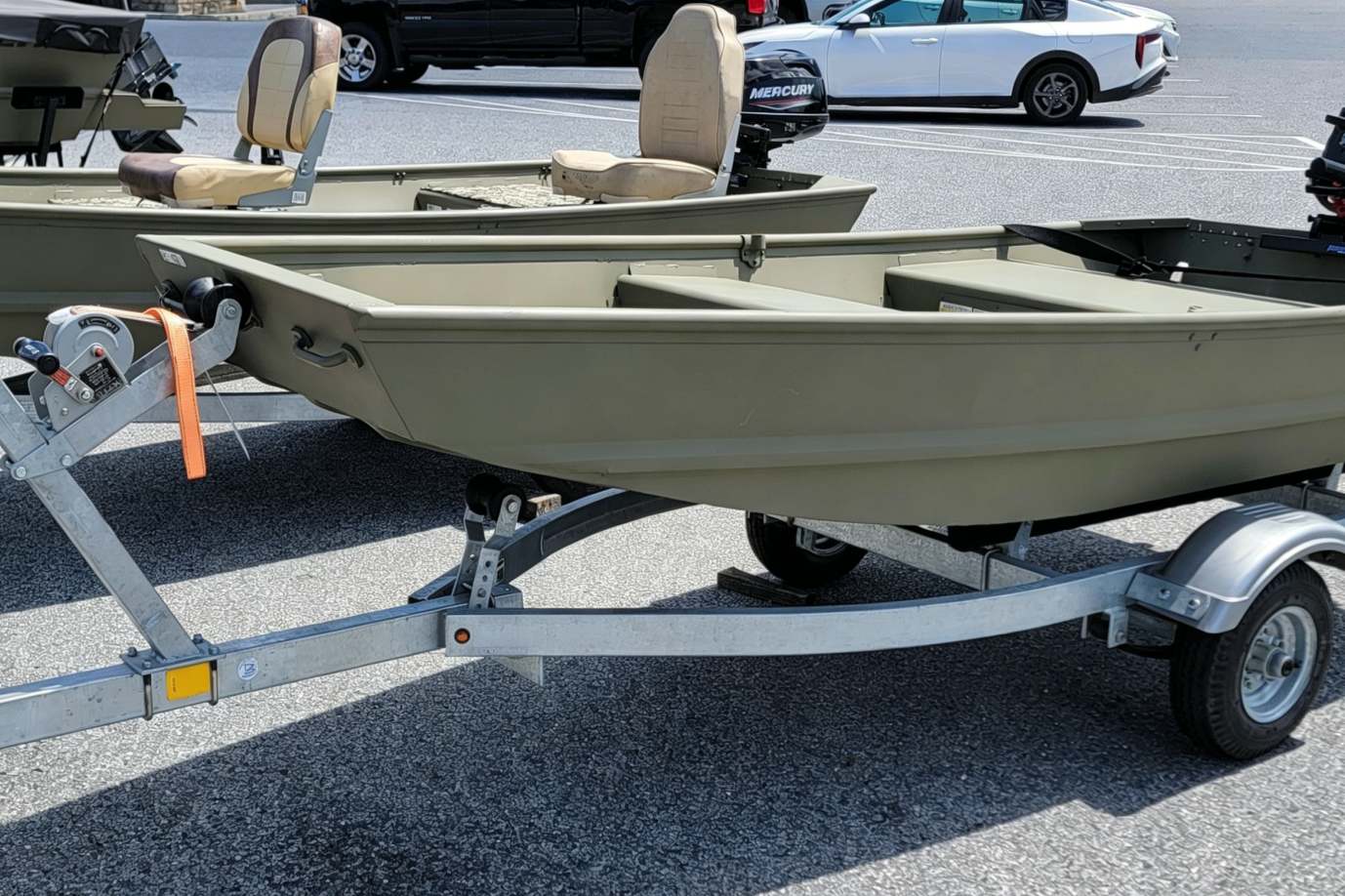
Wide Load Distribution with the 1x2 Roller Group
Flat bottoms need support spread across a wide area to protect rivets.
- Component Specification: The Go Trailer 1x2 Roller group(dimensions 341 × 122 × 122 mm, weighing 1.93 kg) offers a stable wide base.
- Surface Safety: The broad design covers several hull ribs at once.
- Problem Solved: It stops rivets from catching on roller edges, reducing the chance of leaks.
Precision Height Tuning for Flat Profiles
Flat hulls do not self-center, so manual adjustment is necessary.
- Horizontal Leveling: Use a spirit level to set all roller groups at the same height.
- Symmetric Spacing: Position assemblies evenly, about 300 mm inward from the outer edges.
- Secure Hardware: Tighten all fasteners properly so the setup stays solid on rough roads.
Customized Engineering: The Go Trailer Technical Advantage
Every boat and operation has different needs. Standard parts often fall short. Go Trailer offers custom solutions for specific requirements.
Advanced Automation and Material Standards
The factory uses CNC machines, automated cutting, and laser tools for accurate production.
- Advanced Metallurgy: Brackets are made to tight tolerances for lasting strength.
- Compound Customization: PU, Rubber, and TPR materials can be adjusted for different water conditions and temperatures.
- Quality Assurance: Each batch goes through thorough checks to meet commercial standards.
Direct Factory Solutions and Global Logistics
Working directly with the manufacturer removes extra costs and simplifies ordering.
- Direct Communication: Customers speak with engineers without middlemen.
- After-Service Guarantee: Manufacturing defects receive free replacements in future shipments.
- Long-Term Value: Go Trailer builds lasting relationships with commercial clients around the world.
Contact Us Today
Improve safety and loading efficiency for your fleet. Contact the Go Trailer Engineering Team at admin@gotrailerpart.com or call +86 0532 68976869 for quotes on roller assemblies or custom parts.
FAQ
Q: What are the distinct performance advantages of Polyurethane (PU) boat rollers over traditional options?
A: PU rollers have higher strength and resist wear better. They do not split, harden, or develop flat spots under heavy use. They also stay non-marking, protecting fiberglass and aluminum surfaces from black scuffs.
Q: How often should trailer roller assemblies be inspected for commercial marine applications?
A: In commercial or frequent use, check every three months. Look for smooth rotation, cuts in the material, and make sure shafts stay lubricated and free from salt corrosion.
Q: Can a flat-bottom Jon boat trailer configuration be converted to safely transport a deep-V hull boat?
A: Yes. The setup needs to change. Replace flat rollers with adjustable center keel rollers and pivoting side assemblies to match the V-hull’s angled shape.
Q: What causes boat trailer rollers to wear out unevenly on one side of the frame?
A: Uneven wear usually comes from misaligned brackets or an off-center winch. This puts more weight on one side, speeding up wear and stressing the hull.
 English
  Spanish
  Arabic