

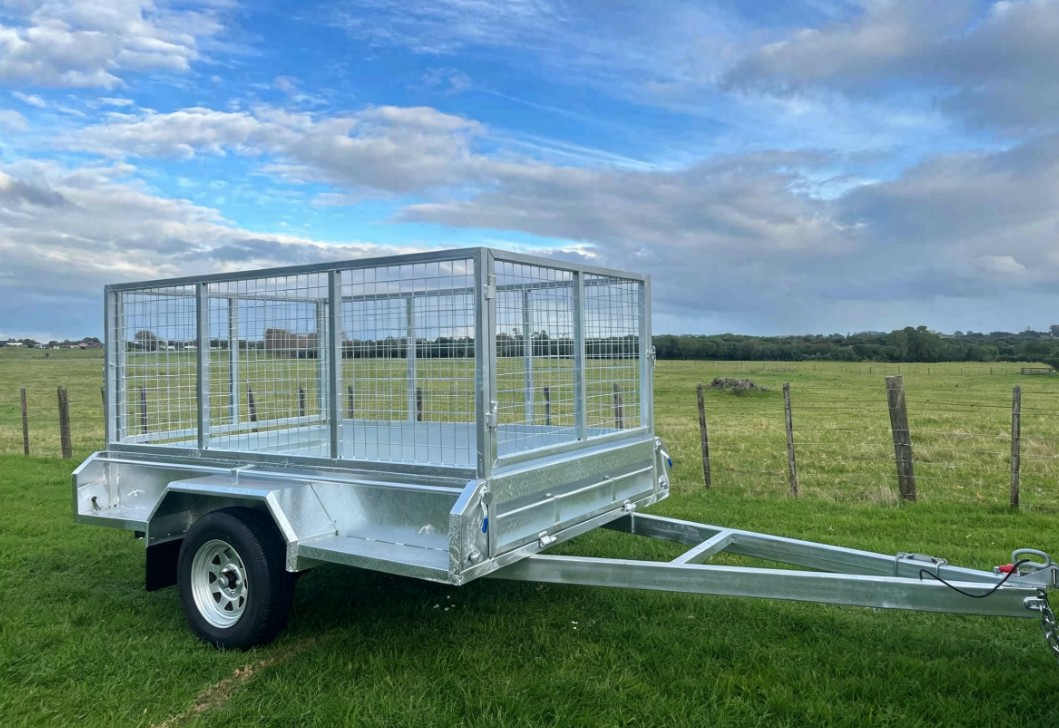
For fleet managers, logistics companies, and trailer builders, downtime and damaged cargo often trace back to one main area: the suspension system. When carrying heavy loads over rough roads or work sites, the small movements in your trailer’s suspension play a big part in keeping everything safe. Go Trailer, a China-based manufacturer of trailers and parts, builds suspension systems that focus on real durability rather than empty claims. Learning how leaf springs work helps improve fleet performance and reduce problems on the road.
The Mechanics of Trailer Stability: Why Suspension Matters
A trailer suspension does more than hold weight in place. It must handle movement and energy from changing road conditions.
The Physics of Load Distribution
The link between the axle and the chassis decides how the weight spreads across the tires during acceleration, braking, and turns.
- Equalized Wheel Contact: Well-designed springs keep even pressure on all tires. This avoids uneven tire wear.
- Axle Alignment Retention: Quality leaf springs stop the axle from shifting or twisting under strong braking forces. This keeps the trailer tracking straight behind the towing vehicle.
- Frame Stress Mitigation: By absorbing vertical impacts, the suspension protects welds and other frame parts from cracking over time.
Eliminating Trailer Sway and Lateral Force
Trailer sway causes many highway accidents, especially in strong side winds or during quick steering changes.
- Roll Stiffness Activation: A strong side-to-side spring setup resists rolling in box trailers during sharp corners.
- Damping Inherent Harmonics: Friction between spring leaves works as a built-in damper. This stops dangerous bouncing from continuing.
- Centered Gravity Restoration: Good suspension parts bring the trailer back to level quickly after hitting potholes or rough edges.
Deep Dive into Double Eye Spring Engineering
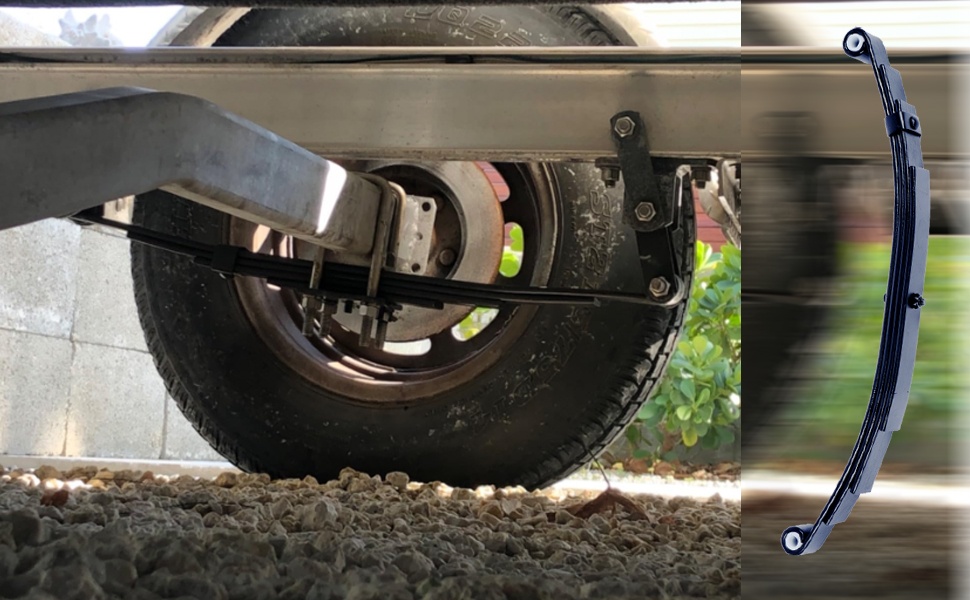
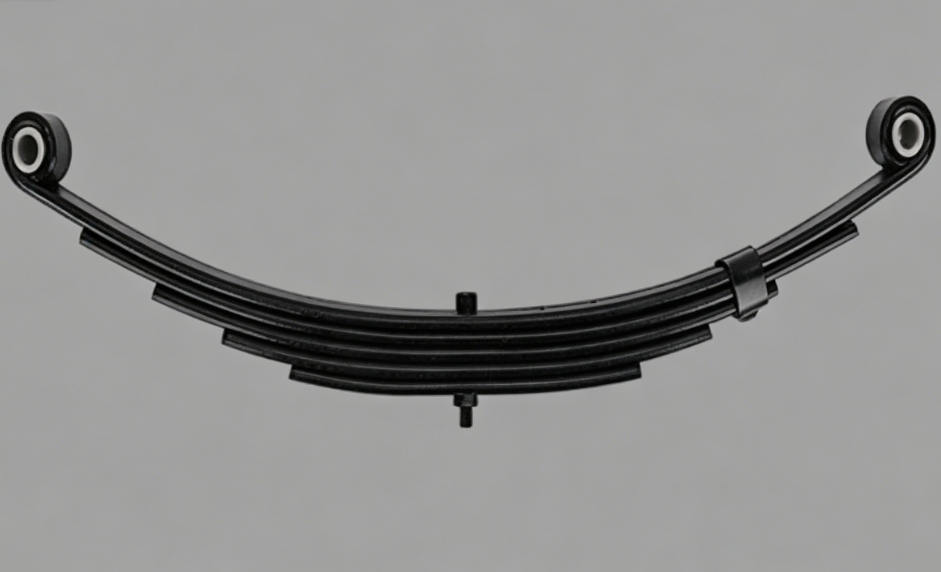
The double eye leaf spring serves as a strong choice for heavy loads and smoother long-distance travel among different suspension types.
Dynamic Energy Absorption and Shock Dissipation
The shape of a double eye spring, with round eyes at both ends, allows controlled bending and good energy release.
- Dual-Pivot Flexing: Shackle links connect both ends to the frame. This lets the spring move evenly when absorbing big road bumps.
- Smooth Rebound Profiles: Unlike single-eye designs that can hit metal harshly, double eye springs provide a gentler ride.
- Progressive Rate Loading: Multiple leaves engage as the weight increases. This gives stronger support when the trailer carries more.
Mechanical Longevity and Wear Reduction
Spreading stress across two mounting points reduces wear on suspension parts and the trailer frame.
- Bushing Friction Control: Nylon or bronze bushings inside the eyes handle rotational movement. This cuts noise and extends part life.
- Symmetric Leaf Loading: The dual-pivot design spreads bending forces evenly. This prevents early cracks near the mounting areas.
- Reduced Maintenance Cycles: Without the sliding wear found in slipper springs, shackle bolts, hangers, and equalizer bars last longer.
Where Performance Meets the Road
These advantages show up clearly in tough transport work and difficult conditions.
Heavy-Duty Commercial Cargo Transport
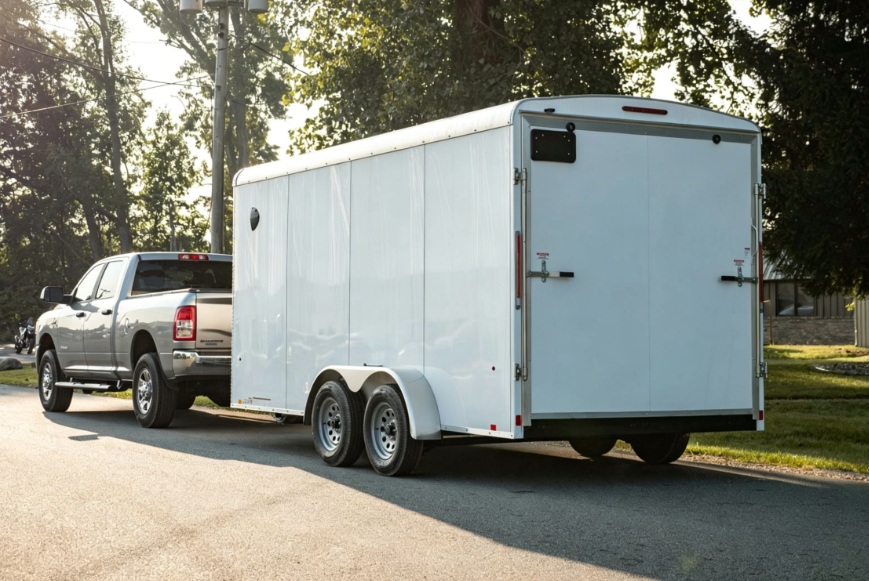
Logistics teams count on sturdy multi-leaf springs. These give steady support for moving heavy or sensitive cargo.
- Defeating Dynamic Sag: The heavy-duty 6-leaf double eye spring, rated at 2200KG per set, holds trailers steady under heavy loads.
- Protecting Delicate Payloads: The 5-leaf double eye spring, rated at 2000KG, cuts road vibrations that might damage electronics or fragile goods.
- Extended Fleet Duty Cycles: Strong multi-leaf systems lead to fewer roadside fixes on long trips.
High-Vibration Marine and Off-Road Environments
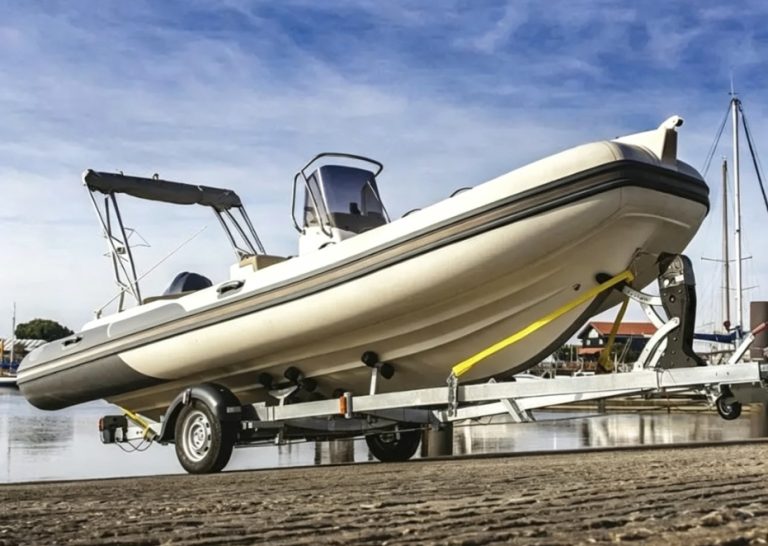
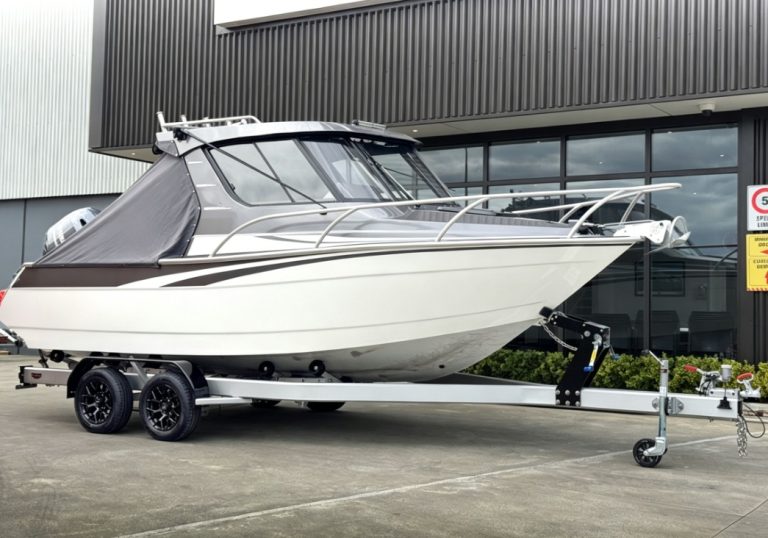
Boat trailers and off-road units face salt and rough terrain.
- Corrosion-Resistant Marine Hauling: The 4-leaf double eye spring, rated at 1800KG, handles saltwater during boat launches.
- Off-Road Impact Deflection: Balanced flex lets utility trailers handle ATVs or supplies over uneven ground without tipping.
- Sub-Zero Temperature Resilience: Quality spring steel keeps its flex in cold winter conditions.
Premium Manufacturing: The Go Trailer Technical Advantage
Go Trailer uses modern CNC equipment, strict quality checks, and good material sources to produce reliable suspension parts.
Advanced Metallurgy and Stress-Relief Technology
The team applies careful heating and mechanical processes to remove weaknesses in the spring steel.
- Supersonic Shot Peening: Every leaf receives high-speed shot treatment. This adds surface strength and roughly doubles fatigue life under repeated loads.
- Automated Quenching and Tempering: Controlled furnaces create even hardness along each leaf. This stops sagging under constant weight.
- Anti-Corrosion Surface Finishing: Hot-dip galvanizing and electrophoretic painting protect against rust even after long exposure to salt spray.
Customized Engineering for Specific Payload Demands
Standard parts do not fit every need. Go Trailer offers custom design and production services.
- Tailored Leaf Thickness profiles: Customers can specify leaf count, thickness, and length to match their trailer dimensions exactly.
- Bespoke Load Capacity Matching: Springs can be built and tested for non-standard weights and travel requirements.
- Complete Integrated Kit Development: Go Trailer supplies matched sets including springs, shackle plates, equalizers, and high-strength bolts for easier factory assembly.
Contact Go Trailer Today
Ready to improve safety, durability, and ride comfort on your trailers? Work with a manufacturer that values real engineering and honest business practices. Contact the technical team at Go Trailer by email at admin@gotrailerpart.com or call +86 0532 68976869. Discuss your wholesale needs or get a competitive quote on standard and custom trailer parts.
FAQ
Q: What is the primary mechanical difference between a double eye spring and a slipper leaf spring?
A: A double eye spring has shackle links at each end. These allow steady movement and solid shock control. A slipper spring carries an eye only at the front end. The rear slides along a wear pad. This design cuts costs but adds noise and speeds wear in one spot.
Q: How does upgrading from a 4-leaf to a 6-leaf double eye spring affect trailer handling?
A: Switching to a 6-leaf double eye spring adds stiffness and lifts capacity from 1800KG to 2200KG. Heavy loads stop causing sag. On empty runs, the firmer ride can feel bouncier though.
Q: Why do leaf springs sag over time, and how can premature failure be prevented?
A: Sagging builds from repeated stress that slowly alters the steel. Overloads and rough roads speed the change. Shot-peened springs, correct axle alignment, and staying inside weight limits all help prevent early wear.
Q: What are the distinct benefits of choosing a customized suspension configuration over off-the-shelf parts?
A: Custom setups let you pick exact leaf sizes, load ratings, and coatings. The result fits special trailer builds more closely and lowers the chance of mismatch issues that come with stock parts.
 English
  Spanish
  Arabic